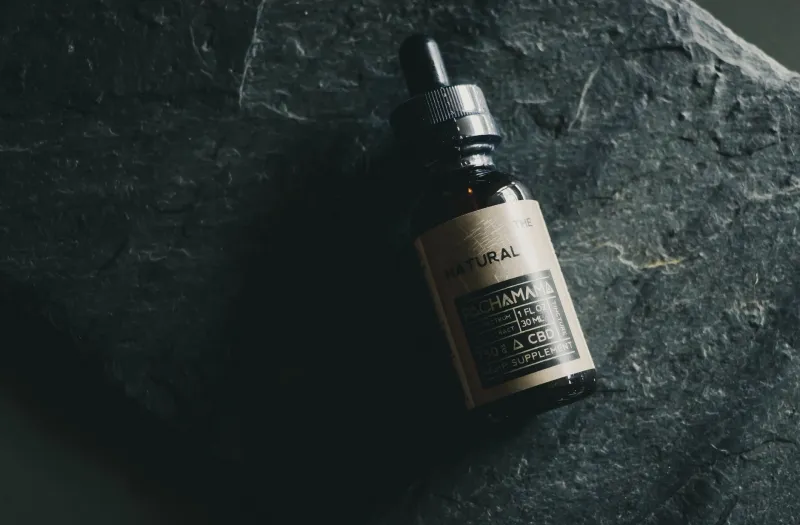
Roast First, Dropper Second? Building a CBD Rhythm That Survives Sunday Lunch
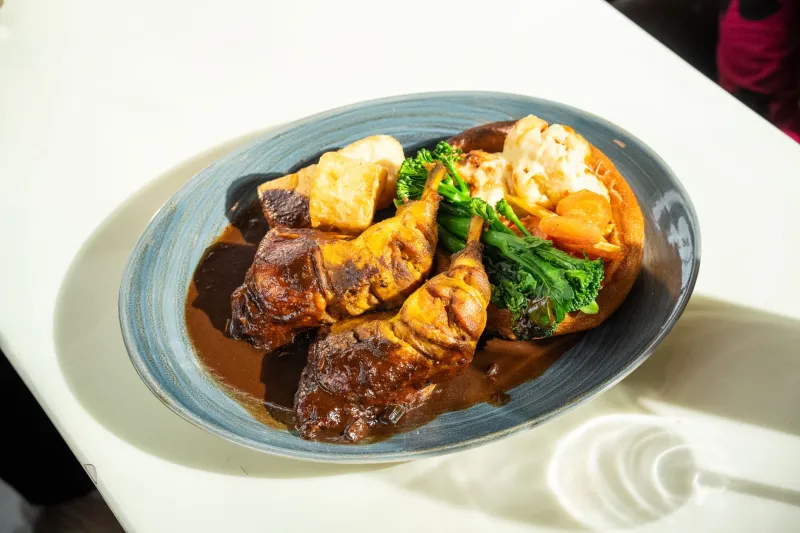
There is a particular kind of British Sunday that runs on a timetable. Church, or a dog walk, or a slow read of the papers. Then the kitchen fills with steam, the oven does its thing, and somewhere around two o'clock a plate arrives carrying roast potatoes, a Yorkshire pudding the size of a saucer, and enough gravy to constitute a food group of its own.
If you take CBD drops as part of your daily routine, this raises a genuinely practical question: where exactly does the dropper fit? Before the roast? After the last potato? Or does it not matter at all?
The honest answer is that it matters a little, but probably less than the internet would have you believe. What follows is a plain-English guide to the food-and-drops relationship, without the pseudo-science that tends to gather around this subject like gravy around a parsnip.
Why Fat Gets a Mention at All
CBD is a fat-soluble compound. That single fact is the root of most of the conversation about food and absorption. The theory goes like this: because cannabinoids are lipophilic — literally 'fat-loving' — taking them alongside a meal containing fat may help them disperse more effectively in the digestive tract, potentially improving how much of the dose your body actually gets to work with.
That is a reasonable, well-rehearsed idea, and there is some early evidence pointing in that direction for certain cannabinoid formulations. But it is important to keep expectations grounded. Absorption of CBD is highly variable between individuals, and much of the research uses specific formulations that don't necessarily map onto the bottle in your kitchen cupboard. You are not going to find a peer-reviewed paper telling you that precisely 47 millilitres of gravy optimises your dose.
So treat the fat connection as a helpful nudge rather than a rule. A roast dinner is, by any measure, a fat-forward meal. That makes it a reasonable companion for your drops — but it doesn't turn timing into an exact science.
The Three Windows, Weighed Up
Before the meal
Taking your drops twenty to thirty minutes ahead of eating is the option most people gravitate towards, largely because it keeps the routine tidy. Drops, then dinner. No juggling.
The catch is that you're taking CBD on a relatively empty stomach, which some people find gives them a quicker, more noticeable onset — and others find a touch too abrupt. If you're new to CBD, or you've recently changed products, this window is worth approaching gently rather than treating as a race.
It does have one quiet advantage: it separates the ritual from the meal, so you're less likely to forget. A habit attached to a fixed moment ('before I dish up') tends to survive longer than one attached to a vague one ('sometime around lunch').
During the meal
Adding drops to food or taking them mid-meal is the option that most directly leans into the fat-absorption idea. It's also the messiest to manage in practice — nobody wants to be measuring oil while the Yorkshire puddings are going cold.
If you do want to pair drops with food, keep it simple: a few drops under the tongue just as you sit down, rather than stirring them into the gravy boat. Sublingual use (holding under the tongue for sixty to ninety seconds before swallowing) remains the most common method for oils, and it doesn't require you to reorganise your plate.
One practical note: don't use the roast as a cover for a bigger dose than usual. A heavy meal doesn't 'need' more CBD, and stacking extra drops on top of an unfamiliar food pairing is a recipe for confusion about what's actually working for you.
After the meal
The post-roast window — say, an hour or two after the plates are cleared — is arguably the most comfortable for a lot of people. The meal is done, the kitchen is a disaster zone, and there's a natural pause in the day.
The trade-off is timing drift. 'After lunch' can quietly become mid-afternoon, and then early evening, and before long your routine has more in common with a suggestion than a schedule. If you go this route, anchor it to something concrete — the kettle going on for the first post-roast cup of tea is a decent marker.
Why 'Perfect' Timing Is Probably a Myth
The truth is that consistency beats precision almost every time. CBD isn't a switch you flip at an optimal moment; it's something people build into a routine and evaluate over weeks, not minutes. Chasing the perfect window — before versus after, fat versus empty stomach — is a quick route to overthinking a habit that should feel effortless.
What's far more useful is a simple record. Note the time, the dose, and roughly what you'd eaten. Do that for a fortnight and you'll learn more about your own patterns than any general guide can tell you, because the variables that matter most are yours: your metabolism, your sleep, your stress, your ordinary Tuesday.
There's also a purity angle worth keeping in view. Timing debates assume you know what's in the bottle. A purity-led product with a clear, up-to-date certificate of analysis — cannabinoid content, carrier oil, the absence of solvents and contaminants — gives you a stable baseline to work from. Without that, you're adjusting the timing of a dose you can't properly account for, which is a bit like tuning a radio with no aerial.
A Workable Sunday Script
If you want something concrete rather than theoretical, here's a default that suits most people:
- Late morning: take your usual drops at your usual time, as you would on any other day. Sunday is not a special case for your routine.
- Roast time: don't add a second dose simply because the meal is heavy. Eat, enjoy it, and let the day be a day.
- Early evening: if your routine includes an evening dose, take it as normal. The gap from the roast is naturally wide enough that the two don't really interact.
The elegance of this approach is that it doesn't ask you to do anything unusual. The roast is a meal, not a variable to be optimised.
The Monday Question
The real test of any CBD routine isn't how it performs on a slow Sunday with a plate of roast beef in front of you. It's whether it survives Monday, when the alarm goes at half six and lunch is a sandwich eaten standing up.
So keep the Sunday answer simple, and let the routine carry the week. Take your drops at a time you'll actually remember, alongside food you actually eat, from a product you can actually verify. That's a far more reliable formula than any clever timing trick — and it leaves you free to concentrate on the important business of whether there's enough crackling to go round.
This article is general wellness information, not medical advice. If you're taking medication or managing a health condition, speak to a healthcare professional before starting CBD.