Ignore the Leaf Print: How to Read a CBD Label Like a UK Insider in 2026
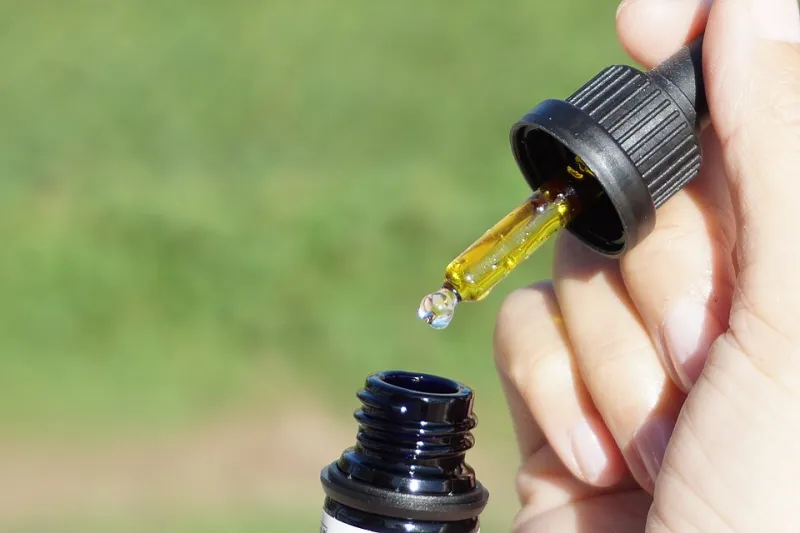
Photo: Elsa Olofsson, CC BY 2.0, via Wikimedia Commons
There is a certain kind of CBD packaging that looks like it was designed by a committee of alpine hikers. Green leaf, bold sans-serif font, a word like 'pure' floating somewhere near the top. It is pleasant. It is also almost completely useless when you are trying to work out what is actually in the bottle.
In 2026, British CBD shoppers have more choice than ever and, unfortunately, more noise. The label is not a trust badge. It is a marketing surface with some legal obligations attached. If you want to buy well, you need to read it like someone who has seen too many vague claims and wants the boring details instead.
This is not about being cynical for sport. It is about being fair to the brands that do the work. A purity-led product should be able to prove it. Here is how to tell the difference.
The packaging is doing a marketing job, not a compliance job
Words like 'pure', 'premium', 'organic' and 'lab-tested' are not all equal. 'Organic' may refer to the hemp, the carrier oil or nothing much at all. 'Lab-tested' can mean a batch was tested for cannabinoids and not for contaminants. 'Pure' is not a regulated CBD term in the way shoppers often assume.
The first rule of label reading is to separate mood from evidence. The mood is the font, the colour and the little leaf. The evidence is the batch number, the CBD strength, the THC figure, the carrier oil, the novel food status and the certificate of analysis. If the evidence is missing, the mood is doing all the work.
Lab reports: the only 'pure' claim that counts
A certificate of analysis, or COA, is the document that tells you what was tested and what was found. It should be batch-specific. That means the number on the report matches the number on your bottle or the brand’s website. A generic COA from last year is not good enough for a product you are using now.
Look for the lab’s name, the date, the cannabinoid profile and the contaminants panel. For CBD oil, a useful COA will usually show CBD and other cannabinoids, THC content, and tests for heavy metals, pesticides, solvents and microbiology. You do not need to become a chemist. You just need to see that the brand is willing to show the paperwork.
If a brand cannot provide a batch-specific COA, that is your answer. Not because every brand without one is dodgy, but because a purity-led brand should expect the question.
THC limits: read the milligrams, not the mood
UK shoppers often see 'THC-free' on a label and assume that is the end of the story. It is not always that simple. Full-spectrum products may contain trace THC, and the legal framing is usually about the amount per container rather than a vague promise on the front.
The commonly cited ceiling for exempt CBD products in the UK is 1mg THC per container. That means the size of the bottle matters. A 10ml bottle and a 30ml bottle can have very different total THC even if the percentage looks small. Read the milligrams. If the label only says 'trace' and nothing else, ask for the COA.
This is also where broad-spectrum and isolate products differ. An isolate should contain CBD and little else. A broad-spectrum product aims to remove THC while keeping other cannabinoids. A full-spectrum product keeps the wider cannabinoid profile, which may include trace THC. None of these is automatically better. They are different tools, and the label should say which one you are buying.
Carrier oils: the quiet ingredient that changes everything
CBD oil is not just CBD. It is CBD plus a carrier oil, and sometimes flavour or other ingredients. MCT oil is popular because it is light, neutral and easy to drop. Hemp seed oil is familiar and earthy. Olive oil is traditional and slower in the mouth. None of these is a scandal, but you should know what you are tasting and why the bottle costs what it does.
Carrier oils also affect how the product feels day to day. If you dislike the taste of hemp seed oil, a strong-flavoured full-spectrum product may end up at the back of the cupboard. That is not a purity problem, but it is a routine problem. A clean label should make the base obvious, not bury it under a fog of wellness poetry.
Full-spectrum, broad-spectrum, isolate: decode the spectrum
These three terms get used as if they are a ranking. They are not. Full-spectrum means the product includes a wide range of cannabinoids, terpenes and other plant compounds, and may include trace THC. Broad-spectrum usually means the THC has been removed or reduced to very low levels while other compounds remain. Isolate means CBD in a more isolated form.
The right choice depends on what you want, what the label proves and how you feel about trace THC. If a brand uses 'full-spectrum' as a synonym for 'better' without explaining the THC content, that is a red flag. If it uses 'isolate' as an insult, that is also a red flag. Good labels explain the difference without turning it into a personality test.
Novel food and UK compliance
In the UK, CBD products are expected to sit within the novel food regime. That is not a glamorous selling point, but it matters. A brand should be able to tell you the status of its products and provide the documentation that goes with it. You do not need to memorise the rulebook, but you should expect clear answers.
This is especially important in 2026, when the CBD shelf is crowded and the phrase 'UK compliant' is used loosely. Compliance is not a sticker. It is a paper trail.
The 2026 label checklist
Before you buy any CBD oil in the UK, ask these questions:
- Is there a batch-specific COA I can read before buying?
- Does the COA show CBD, THC and contaminant tests?
- Is the CBD strength clear in mg per bottle and per drop or ml?
- Is the carrier oil named?
- Is the product full-spectrum, broad-spectrum or isolate?
- Is the THC content declared in mg per container?
- Does the brand explain its novel food status clearly?
- Can I contact a human if I have a question?
If the answers are clear, you can make a decision. If the answers are vague, you are not being difficult. You are doing exactly what a crowded market should expect.
Purity is not a buzzword when it comes with a batch number, a lab report and a straight answer. Until then, it is just a nice font on a nice bottle.