The Ten-Minute Briefing: Taking CBD to the Pharmacy Counter Without the Guesswork

Photo: pharmacist discussing medication with patient at UK pharmacy counter dosette box, via crystalpng.com
There's a particular pause at a pharmacy counter. You've queued behind someone collecting a repeat prescription, you've got a dosette box under one arm and a small dropper bottle in your bag, and you're not quite sure how to start. The pharmacist looks up. You say something like, 'I've been taking CBD — is that all right with all this?' And the conversation either goes somewhere useful or stalls at a polite shrug.
This isn't a medical guide, and it isn't a reason to skip the chat. It's a plain-English briefing for the ten minutes before that pause — so you turn up with the right information, ask the right questions, and leave with notes rather than a vague sense of unease.
Why the Dosette Box Changes the Conversation
A dosette box is a quiet signal: there are several medicines in play, often at different times of day, often for different reasons. That matters because the more moving parts a routine has, the more a new addition deserves a proper look rather than a shrug.
CBD drops are sold in the UK as food supplements, not medicines. That single fact shapes what a pharmacist can do. They are experts in prescribed medicines — timing, side effects, how one medicine sits alongside another. They are not there to recommend a CBD brand, sign off a dose, or tell you a product 'works'. If you arrive expecting a green light for the dropper, you'll be disappointed. If you arrive with a clear picture of what you're taking, you'll get far more out of the conversation.
What to Put in the Bag
Treat it like a ten-minute briefing. Bring:
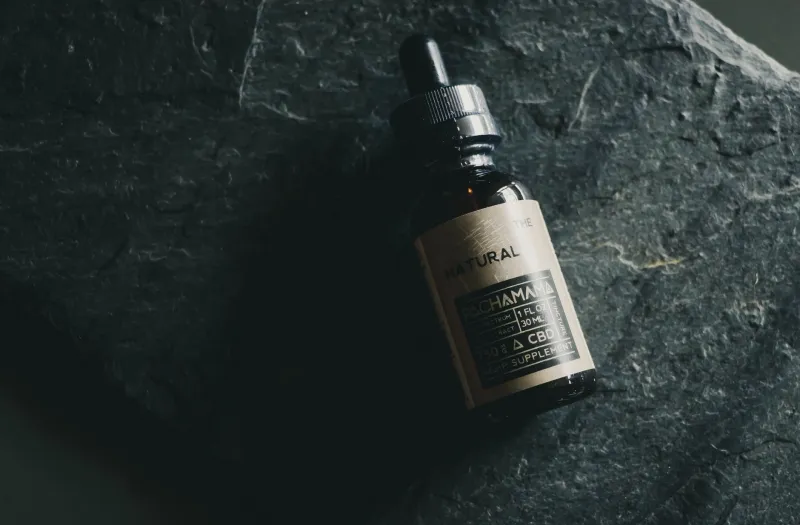
- The product label, or a photo of it. Front and back. The strength per drop or per ml, the carrier oil, the batch number, and the manufacturer's name.
- Your medicine list. A repeat prescription slip is ideal; if you don't have one, a written list with doses and times is fine.
- Your own timing. When do you actually take the drops, and when do you take your medicines? 'Morning with the tablets' is useful; 'whenever' is not.
- Any notes you've kept. If you've been tracking how you feel, or how your routine has changed, say so briefly. No need for a spreadsheet.
Leave at home the phrases that close conversations: 'it's natural, so it's fine', 'my mate takes it', 'the website said it was pure'. None of those help a pharmacist think about your medicines. Specifics do.
The Purity Ledger: Three Details That Travel
Purity-led CBD isn't a mood; it's a paper trail. Three details are worth knowing before you walk in, because they're the ones a pharmacist can actually work with.
First, the carrier oil. Many UK drops use MCT oil (from coconut), some use hemp seed oil, some use olive oil. The carrier isn't a headline ingredient, but it's part of what you're swallowing every day. If you have a known allergy or sensitivity, that's worth mentioning.
Second, the cannabinoid content. Not just 'CBD' on the front, but how much per drop or per ml, and whether the label states THC content. A clean label tells you what's in the bottle and what isn't.
Third, the batch and the lab. A batch number and a third-party certificate of analysis are the difference between a claim and a check. You don't need to bring the certificate, but knowing whether it exists is part of knowing your product.
The Questions They Can Answer — and the Ones They Can't
A pharmacist can help you think about your prescribed medicines: whether timing matters, whether anything in your routine is easy to forget, whether a medicine is known to cause drowsiness, and whether it's worth mentioning CBD to your GP. They can also flag that some medicines have specific food or timing requirements.
What they can't do is approve a CBD product, tell you it's safe with a particular medicine, or suggest a dose. That's not a brush-off; it's the boundary between a food supplement and a medicine. If you want a clinical opinion on your overall routine, the route is your GP or a pharmacist-led consultation — and even then, bring the product details.
A useful question is: 'Is there anything about my current medicines that means I should be careful about adding a supplement?' It's open, honest, and doesn't ask them to do something they can't.
A Short Script for the Counter
You don't need a speech. Something like this works:
'I take these medicines [hand over list]. I've started using a CBD oil — here's the label. I'm taking it at [time], about [amount]. I'm not asking you to recommend it; I'd just like to know if there's anything in my medicine routine I should be keeping an eye on, or anything I should mention to my GP.'
That's it. It's specific, it respects their role, and it gives them something to work with.
After the Chat: Write It Down
Before you leave, note the date, who you spoke to, what you asked, and what they said. If they suggested mentioning it to your GP, write that down too. Keep the note with your product batch number. If your routine changes — a new medicine, a new brand, a different carrier oil — the note is a starting point rather than a shrug.
The Daily Wellness Bit
None of this is about turning a daily wellness habit into a medical drama. It's about removing the guesswork. A dropper bottle and a dosette box can sit on the same kitchen counter without either one being a mystery. The trick is to treat the pharmacy counter as a briefing, not a test — and to know your product well enough to describe it in plain English.
If you're buying CBD in the UK in 2026, purity-led means knowing the label, the carrier and the batch. That knowledge doesn't just help you shop. It helps you have a better conversation with the person behind the counter.