The Golden Glow Trap: What Clear CBD Oil Really Says About Purity

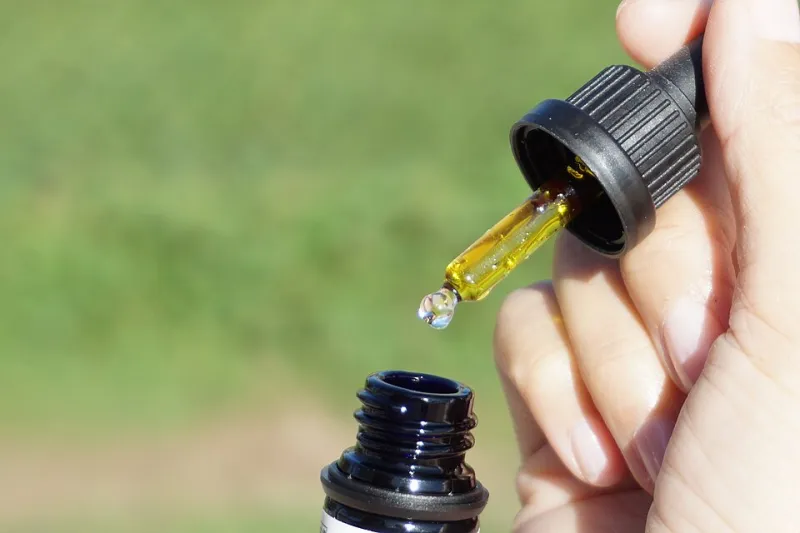
Photo: clear golden CBD oil dropper bottle on kitchen counter natural light, via runway-media-production.global.ssl.fastly.net
Walk into any British kitchen with a CBD bottle on the counter and someone will eventually pick it up, tilt it to the window and pronounce judgement. Too dark. Too cloudy. Not golden enough. We do love a visual shortcut. And fair enough: when you are spending thirty or forty quid on a small bottle of drops, you want it to look the part. But the link between what a CBD oil looks like and how pure it actually is? Thinner than most of us assume.
Clear does not mean clean
A transparent, pale oil has a certain clinical appeal. It looks filtered, tidy, almost pharmaceutical. Sometimes it is. Sometimes it has simply been through a process designed to remove colour — winterisation, fine filtration, maybe bleaching earth in some refined ingredients — and that process says more about style than safety. Colour in CBD oil often comes from plant pigments such as chlorophyll, plus the natural tint of cannabinoids and terpenes. A golden-amber hue can be a sign of a fuller-spectrum extract. A very pale oil can be a sign of a highly refined isolate blend. Neither is automatically better. They are different products with different jobs.
The trap is assuming that clarity equals purity. In reality, a clear oil can still carry inaccurate cannabinoid claims, unwanted solvents or a carrier oil that disagrees with you. A darker oil can be perfectly well made. Appearance is a vibe, not a certificate of analysis.
The myths we keep falling for
Golden glow equals premium. It is a lovely marketing story: sunshine in a dropper. But gold is a colour, not a grade. Some excellent oils are amber; some very ordinary ones are pale straw.
Sediment means natural goodness. A bit of murk can come from plant waxes or poor filtration. It might be harmless; it might suggest a rough process. It is not a purity badge. If there are visible particles in an MCT-based oil, ask why.
Cloudiness means contamination. Not usually. Coconut-derived MCT oil can solidify or cloud when it gets cold. A bottle left by a chilly British window in February may look odd and be perfectly fine once warmed. Temperature changes are common. Contamination is not something you can diagnose by squinting.
Darker means stronger. Not reliably. Colour does not map neatly onto milligrams of CBD per drop. A dark green oil may have more chlorophyll, or it may simply be less filtered. Strength is a number on a batch test, not a shade on a Pantone card.
What your eyes can actually do
Visual checks are not useless. They are just limited. You can spot separation, obvious particles, a damaged cap, a label that looks like it was designed in a hurry, or a bottle that has been sitting in direct sun. You can notice if the oil has changed texture or smell since you bought it. Those are useful housekeeping signals.
What you cannot do is look at a dropper and know the cannabinoid content, the pesticide residue, the heavy metal profile or whether the batch matches the label. Purity lives in the lab, not the liquid’s lustre.
The signals that deserve your attention
If you want to judge a CBD oil properly, start with the paperwork. A reputable brand should be able to point you to a batch-specific certificate of analysis — not a generic PDF from three years ago. The COA should match the batch number on your bottle and include cannabinoid content plus contaminant testing: heavy metals, pesticides, residual solvents, microbials. In 2026, this is basic hygiene, not a luxury extra.
Extraction method matters too, though it is not a simple good-versus-bad story. CO2 extraction and ethanol extraction can both produce clean oils when the process is controlled properly. What you want is a brand that can explain its process without hiding behind words like ‘naturally extracted’. Ask how the extract is refined, what carrier oil is used, and whether the final product is tested after blending. A clean extract can still be let down by a sloppy fill line.
A fridge-door checklist
Before you buy, look for a batch number, a date on the COA, a clear cannabinoid breakdown and a contaminant panel. Check that the carrier oil is stated plainly. See whether the brand tells you how to store the drops — cool, dark, upright, away from the kettle steam. None of this is glamorous. It is just more reliable than holding the bottle up to the light and hoping for a sign.
The cleanest-looking CBD oil is not necessarily the cleanest CBD oil. The one you can verify is a better bet. Looks can start the conversation. Batch testing should finish it. At Pure Drip CBD, we would rather talk about a batch number than a beautiful golden hue.