The Code on the Base, Not the Code on the Map: Reading CBD Batch Numbers Without the Detective Hat
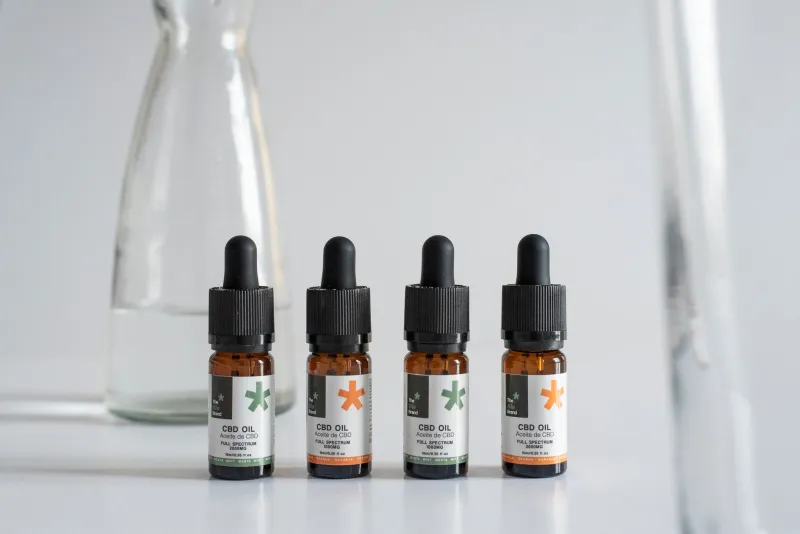
There's a small moment of satisfaction in turning a CBD bottle upside down and finding a neat little code printed on the base. It feels like proof. Like the brand has nothing to hide. And to be fair, that instinct isn't wrong — a batch code is a genuinely useful thing. It's just not the thing most of us assume it is.
A batch code is not a postcode. It doesn't tell you where your bottle has been, who handled it, or whether the oil inside is as pure as the website says. What it does is point you towards a record. Whether that record is worth reading is a separate question entirely.
This is the check I run whenever a new bottle lands on the kitchen worktop. It takes about five minutes, it doesn't require a chemistry degree, and it stops short of turning your evening into an episode of Silent Witness.
What a batch code actually is
In plain terms, a batch code is a reference to a production run. A brand makes a quantity of oil, assigns it a code, and that code should link to testing documents — usually a certificate of analysis, or CoA — produced by a laboratory.
The idea is sound. If something goes wrong with a run, the brand can trace it. If you want to know what was tested, the code gets you to the paperwork. It's a filing system with a bit of accountability baked in.
What it is not is a certificate of purity in itself. The code is the door handle. The CoA is the room behind it. And sometimes the room is empty.
The five-minute traceability check
Grab the bottle, your phone, and a cup of tea. That's the whole setup.
1. Find the code and copy it exactly
It's usually on the base, sometimes on the side of the label near the barcode. Note the punctuation. Batch codes are fussy things — a dash where you expected a slash will often return nothing. If there's a code on the outer box and a different one on the bottle, that's worth a raised eyebrow.
2. Go to the brand's own lookup page
Most purity-led brands now have a batch lookup or 'verify your product' page. Type the code in. What you're looking for is a specific result for your specific code, not a generic 'all our products are tested' page with a stock photo of a laboratory.
3. Check the certificate names the batch
The CoA should reference the same batch code you just typed. It should also name the laboratory that did the testing, and carry a date. A certificate with no batch reference is a leaflet, not a record.
4. Read the cannabinoid panel
You're looking for the declared cannabinoids — CBD, and whether THC is present and at what level. You don't need to interpret every decimal. You do need the numbers to be legible and to roughly match what the label claims.
5. Glance at the contaminant section
Heavy metals, pesticides, solvents, microbials. Not every brand tests for every category, and that's a legitimate conversation to have with them. A blank space is not the same as a pass.
6. Note the date
A certificate from three years ago attached to a bottle bought this month is a dead end dressed up as transparency. Testing should track the run, not the brand's greatest hits.
The dead ends you'll actually hit
A few things come up again and again, and none of them are automatically sinister — they're just worth noticing.
- The lookup page that goes nowhere. You enter the code, the page reloads, and you're back on the homepage. That's a design failure at best.
- The scanned PDF that's basically fog. If you can't read the lab name, you can't check the lab.
- The code that only exists on the box. Once the box is in the recycling, your traceability goes with it. Print it on the bottle.
- The unnamed laboratory. 'Independently tested' means very little if nobody will say by whom.
- The batch of one. Some small brands produce in tiny runs, which is fine, but it can mean there's very little to compare against.
None of these are reasons to panic. They're reasons to ask a question, and a decent brand will answer it without getting defensive.
What the check cannot do
This is the bit that gets skipped, so let's be clear about it.
A batch code cannot confirm that the bottle in your hand came from the run it references. It cannot tell you how the oil was stored after it left the lab, whether it sat in a warm van in July, or whether the dropper was ever used and returned. It cannot prove the laboratory is beyond reproach, only that one exists. And it cannot substitute for a brand that simply does the boring work properly, batch after batch.
Traceability is a floor, not a ceiling. It's the minimum standard of a serious operation. It is not, on its own, proof of purity.
Why a tidy lookup page isn't the whole story
There's a particular kind of CBD website that has clearly spent more on the verification page than on the verification. Animated shields. Words like 'pharmaceutical-grade' floating in a sans-serif font. A QR code that leads to a video.
It's not that these things are dishonest. It's that they're answering a different question. They're reassuring you, rather than informing you. The informative version is duller: a code, a certificate, a lab, a date, a set of numbers you can read without zooming in twice.
At Pure Drip CBD, the standard we aim for is that dull version. Purity-led, for us, means the paperwork should be quicker to check than the marketing is to read. If you have to squint, something's off.
Doing it once, then getting on with your day
You don't need to run this check every morning before your drops. Once per new bottle is plenty. Once per new brand is sensible. After that, the routine should be the easy part — a dropper, a number you can keep, and a bottle that lives in a cool dark cupboard rather than on the windowsill.
The batch code is a useful little tool. It's just a starting point, not a verdict. Check it, read the certificate, ask the awkward question if something doesn't line up — then put the detective hat back in the drawer and get on with your day.