The Direct Debit in the Drawer: Does Your CBD Subscription Match Your Actual Routine?

Photo: elsaolofsson, CC BY 2.0, via Wikimedia Commons
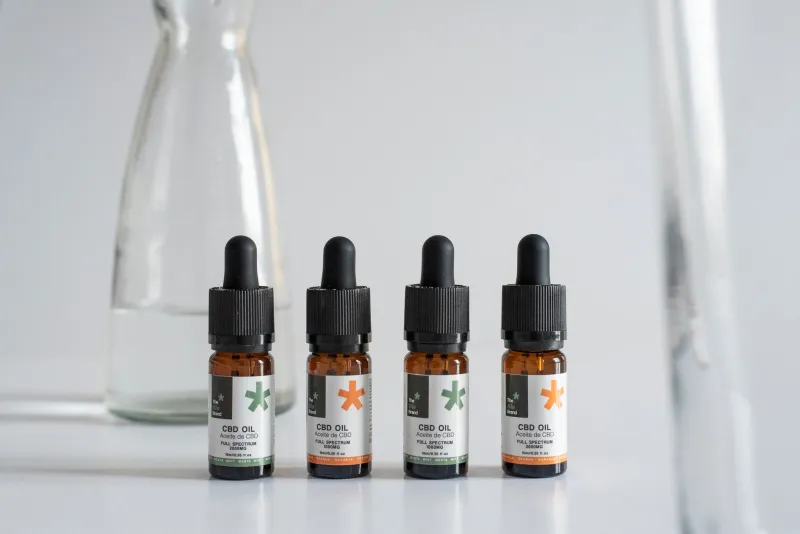
A CBD subscription has a soothing pitch: one less decision, a slightly lower price per bottle, and a delivery that lands while you are getting on with the week. For some British households, that is genuinely useful. For others, it is how a kitchen drawer ends up with three half-used droppers and a renewal date nobody remembers choosing.
The question is not whether subscriptions can save money. They can. The question is whether yours is saving money on a routine you actually have, or quietly funding a routine you meant to start. That distinction matters more in 2026, when plenty of UK CBD brands are competing on monthly plans and the renewal button is often easier to find than the pause button.
The discount is real, but it is conditional
A subscription usually works by trading commitment for a lower per-bottle price. That is a fair exchange if the bottles get used. It stops being fair when the plan outruns your usage and the cupboard becomes a small museum of good intentions.
Run the simple sum first. Look at the price you pay per bottle on subscription and compare it with the one-off price. Then compare both with the amount you actually get through in a month. A ten per cent saving on a bottle you take six weeks to finish is not a ten per cent saving on your routine. It is a ten per cent saving on a bottle that spends a fortnight longer than planned on the shelf.
This is not a reason to avoid subscriptions altogether. It is a reason to treat the subscription as a mirror of your routine rather than a substitute for one.
Count the drops, not the marketing
CBD drops are easy to over-buy because the bottle is small and the language is large. A plan that delivers every 30 days assumes you finish each bottle in 30 days. Does that match how you actually use the product?
If you take a few drops in the morning and a few more after work, your bottle may last longer than a month. If you skip weekends, travel often, or simply forget for days at a time, the gap widens. None of that is a failure. It just means a monthly plan may be too fast for you.
Use your own routine as the baseline. Check the label on the bottle you already have, note how many drops you take on a typical day, and work out roughly how many weeks a bottle lasts. If the answer is closer to six weeks than four, a monthly subscription is not a saving. It is a storage problem with a payment schedule attached.
Freshness starts when you open the bottle
The batch date on the base of the bottle is useful, but it is not a magic shield. Once a bottle is opened, the practical clock starts. A subscription that keeps arriving faster than you can use it can leave you with several open or partly used bottles, which is not the purity-led habit most of us are aiming for.
Storage matters too. A cool, dark cupboard away from the kettle steam, the radiator and the sunny windowsill is the usual advice for a reason. If your subscription bottles are queueing up because you cannot get through them, the problem is not the cupboard. It is the cadence.
A sensible question before renewal: how many bottles are open, how many are unopened, and when did you last finish one? If the answer involves a bottle you opened before the last delivery arrived, the plan is running ahead of you.
Renewal terms deserve a five-minute read
Subscriptions are administrative as well as financial. Before the next payment, check the terms you agreed to. Can you pause, skip a delivery or change the interval? How much notice do you need to give? Does the price change after an introductory period? Are delivery dates fixed, or can you move them around payday?
These details are not glamorous, but they are where a good plan becomes a neutral one. A subscription that suits you in January may not suit you in July, especially if your routine changes with the seasons, your workload or the simple fact that you have stopped using the product as often as you expected.
If the brand makes pausing difficult, treat that as information. A plan that is easy to start and awkward to adjust is not really a routine tool. It is a commitment device.
The 2026 pre-renewal checklist
Before the next direct debit leaves your account, run this short audit:
- Open your last three orders and note the delivery dates.
- Count how many bottles are currently open, unopened or half-used.
- Work out roughly how many weeks one bottle lasts in your actual routine.
- Compare that with the subscription interval. If the plan is faster, consider skipping or pausing.
- Check the per-bottle price against the one-off price, including any delivery charge.
- Read the renewal terms again, especially notice periods and price changes.
- Confirm the delivery address still works for you.
- Decide whether the next delivery is genuinely wanted, not just already scheduled.
- If you are unsure, pause the plan rather than cancel in a rush. A pause is a useful test.
- Set a reminder for the week before the following renewal.
A subscription should follow the routine
The useful version of a CBD subscription is boring in the best way. It arrives when you need it, it replaces a bottle you have nearly finished, and it costs less than buying the same bottle ad hoc. The unhelpful version arrives on schedule whether or not you are ready.
For a purity-led approach, the bottle that gets used while it is fresh is worth more than the bottle that was cheap but forgotten. At Pure Drip CBD, that is the lens we would apply to any monthly plan: not just what the direct debit saves, but whether it matches the way you actually live.