A Dropper Is Not a Pour: Giving Your CBD Routine a Number It Can Keep
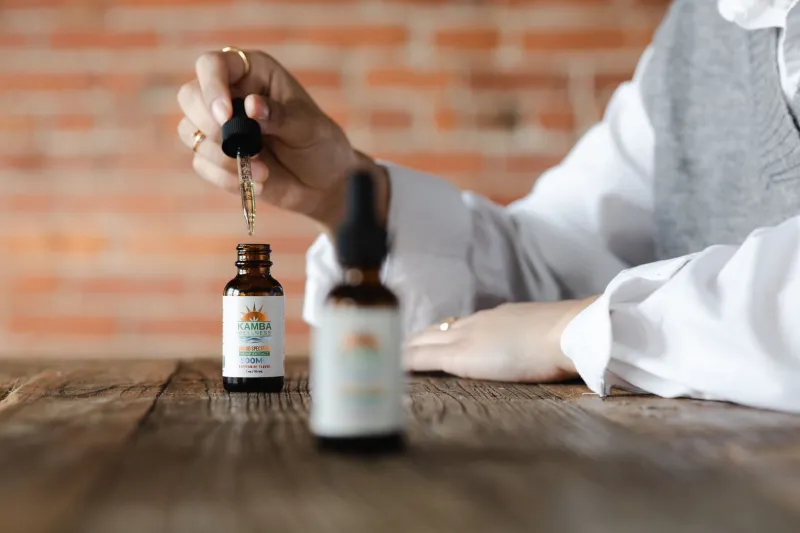
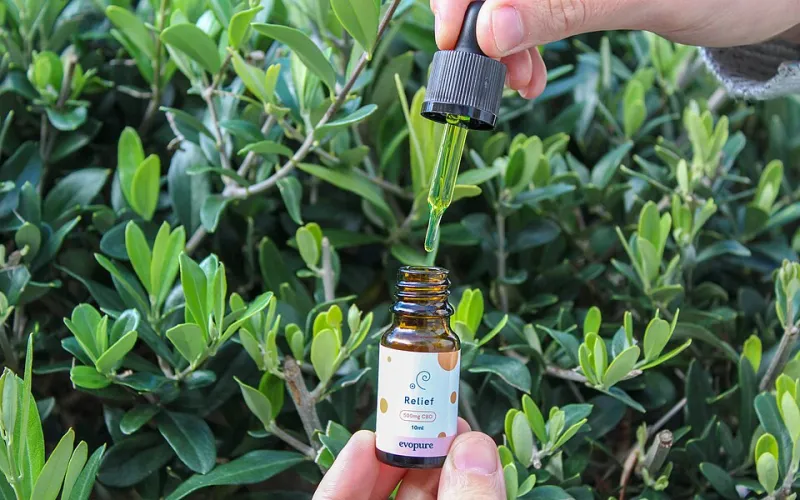
There is a particular gesture that has become almost automatic in CBD routines: unscrew the cap, give the dropper a squeeze, let a few drops fall, screw it back up and carry on with the kettle. It feels neat. It feels intuitive. It is also about as consistent as guessing the weather in Manchester.
The trouble is not that people are careless. It is that the language around CBD drops is often vague by design. "A few drops", "one squeeze", "a small serving" — these phrases sound friendly, but they do not give you a number. And without a number, you cannot compare one bottle with another, track what suits you, or notice when a batch feels weaker than the last one. For a purity-led routine, that is a fairly big blind spot.
The squeeze varies more than you think
A dropper is a simple bit of kit, but it is not a precision instrument in the way people imagine. The amount that comes out depends on the viscosity of the oil, the angle you hold the bottle, how hard you squeeze the bulb, whether the dropper is full or nearly empty, and even how warm the bottle is. Two people using the same product can produce two very different drops without meaning to.
That matters because CBD oils are not all built the same. A bottle might be 10 ml and contain 500 mg of CBD, or 30 ml with 1,000 mg. The strength is not the same as the serving size, and the serving size is not the same as "one squeeze". If you never measure, you are effectively changing the experiment every time you use the product.
This is not about turning your kitchen into a laboratory. It is about giving your routine a fixed point. A number on a dropper is that fixed point.
Start with the label, not the dropper
Before you worry about markings, look at what the bottle actually says. You are usually looking for three things: the total amount of CBD in the bottle, the volume of the bottle, and any suggested serving information. In the UK, CBD oils are typically sold in millilitres, and the CBD content is usually given in milligrams.
A simple example: a 10 ml bottle containing 500 mg of CBD works out at 50 mg per millilitre. A 30 ml bottle containing 1,500 mg works out at the same 50 mg per millilitre, even though the bottle looks much bigger. That is why the bottle size alone tells you very little. The useful number is the concentration — milligrams per millilitre — because that is what your dropper is actually delivering.
If the label does not make this easy to work out, that is worth noticing. A clean, purity-led product should not make you hunt for basic information. You should be able to see what is in the bottle, how much there is and what the batch number is without squinting at the small print.
Use the markings you have
Many CBD droppers come with graduations on the glass or plastic, often showing 0.25 ml, 0.5 ml, 0.75 ml and 1 ml. Not all do. Some are plain, which is deeply unhelpful if you are trying to build a routine. If yours has markings, use them. Fill the dropper to the same line each time rather than squeezing until it "looks about right".
If your dropper has no markings, you have a few options. You can use a clean 1 ml measuring syringe from a pharmacy, or a small measuring spoon if the volume is large enough to make that sensible. You can also ask the retailer whether they sell a marked dropper separately. What you should not do is assume every dropper holds exactly 1 ml. Some do, some do not, and the difference can be significant over a week.
A small habit helps: keep the dropper upright, do not shake it like a ketchup bottle, and let the oil settle before you squeeze. None of this is complicated, but it makes your number more repeatable.
Keep a log that is shorter than your shopping list
A dose log does not need to be a spreadsheet with colour-coded tabs. A note on your phone is fine. Write down the date, the product name, the batch number, how much you took in millilitres, what time you took it and anything you noticed. That is it. Five fields, maybe thirty seconds.
The point is not to become a person who talks about bioavailability at dinner. The point is to spot patterns. If you change from one bottle to another and the same measured amount feels different, you have a useful clue. If a new batch seems weaker, you can check whether you changed your measurement or whether the product changed. If you are comparing two UK brands, you can compare like with like instead of comparing one person's squeeze with another person's squeeze.
For anyone building a daily wellness routine, that is far more useful than a shelf full of decorative bottles. It also fits the Pure Drip CBD idea of keeping things clean and straightforward: a product you can read, a measurement you can repeat and a routine you can actually follow.
The number is the routine
CBD does not need to be mysterious. A dropper is not a serving, and a squeeze is not a measurement. Give your routine a number — even a modest one — and you stop guessing. You can compare products honestly, track your own habits and notice when something is off. That is not chemistry. It is just a slightly better version of the same daily habit, with the guesswork taken out.
If you are using CBD alongside prescribed medication or have any health concerns, speak to a pharmacist or GP. This article is general wellness information, not medical advice.